
The Day I Couldn't Face the Garden Centre
My name's Margaret. I'm 61. I spent thirty years as a school receptionist, on my feet across hard floors, and these days I'm the one looking after the grandkids three days a week.
About a year ago, my feet started turning on me.
It crept in slowly. First it was the mornings, that sharp, stabbing pull through my arch the moment my foot touched the floor. Then it followed me through the day. By lunch my heels were throbbing. By teatime I was hobbling to put the kettle on.
I told myself it was just my age. Just part of being a woman who's been on her feet her whole life. But then came the Saturday that scared me.
My daughter asked if I fancied a wander round the garden centre, my favourite thing in the world. And I said no. Not because I didn't want to go. Because I knew, by the second aisle, my feet would be on fire and I'd be looking for somewhere to sit.
That's when it hit me. This thing was quietly shrinking my world. The walks. The shopping. The standing at a wedding. One by one, I was giving them up and pretending I didn't mind.
The Wardrobe Nobody Talks About
If you've got foot trouble, you know the wardrobe. The graveyard of every "comfortable" pair that was supposed to fix it. Here's what was in mine:
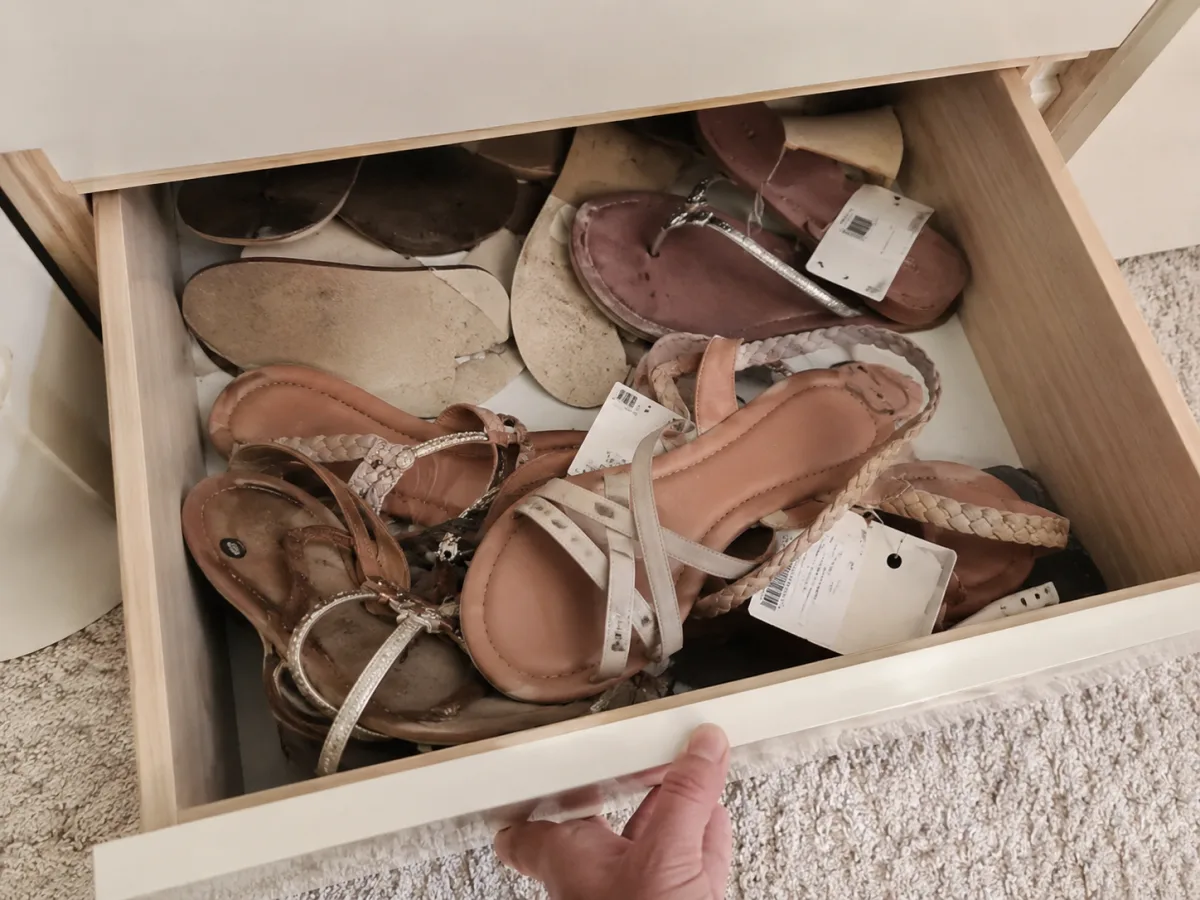
- Three pairs of "orthopaedic" sandals so ugly I only wore them in the house. Felt like walking on cardboard.
- Memory-foam flip-flops. Heaven for about four days. Then I could see the dent where my heel had flattened them into nothing.
- Expensive high-street "arch support" sandals. £65. Pinched my bunion so badly I had a blister by the afternoon.
- Gel inserts I shoved into my normal sandals. They slid around and bunched up under my toes.
Every single pair came from the same desperate hope: maybe this is the one that lets me stay on my feet without paying for it that night. And every single pair ended up at the bottom of that wardrobe.
What I Was Told, and What Was Actually Wrong
I finally went to see someone about it. The advice? "Try to take the weight off. Maybe lose a bit. Take a paracetamol before you're on your feet for long." The same tired script handed to every woman over 50.
The one real option that might help, I was told, was custom orthotics, moulded supports made just for my feet. The quote? Between £400 and £800. For supports I'd have to wear inside ugly shoes anyway.
I couldn't justify that. So I went home and kept standing on the problem. That's when I stopped trusting the usual advice and started reading on my own. Not "Top 10 Sandals" lists. Actual material on how feet are supposed to work. And one idea stopped me cold.
Why Every Sandal in That Wardrobe Failed for the Same Reason
It comes down to one thing podiatrists understand that the high street doesn't: your foot is the foundation of your whole body and a flat sandal gives that foundation nothing to stand on.
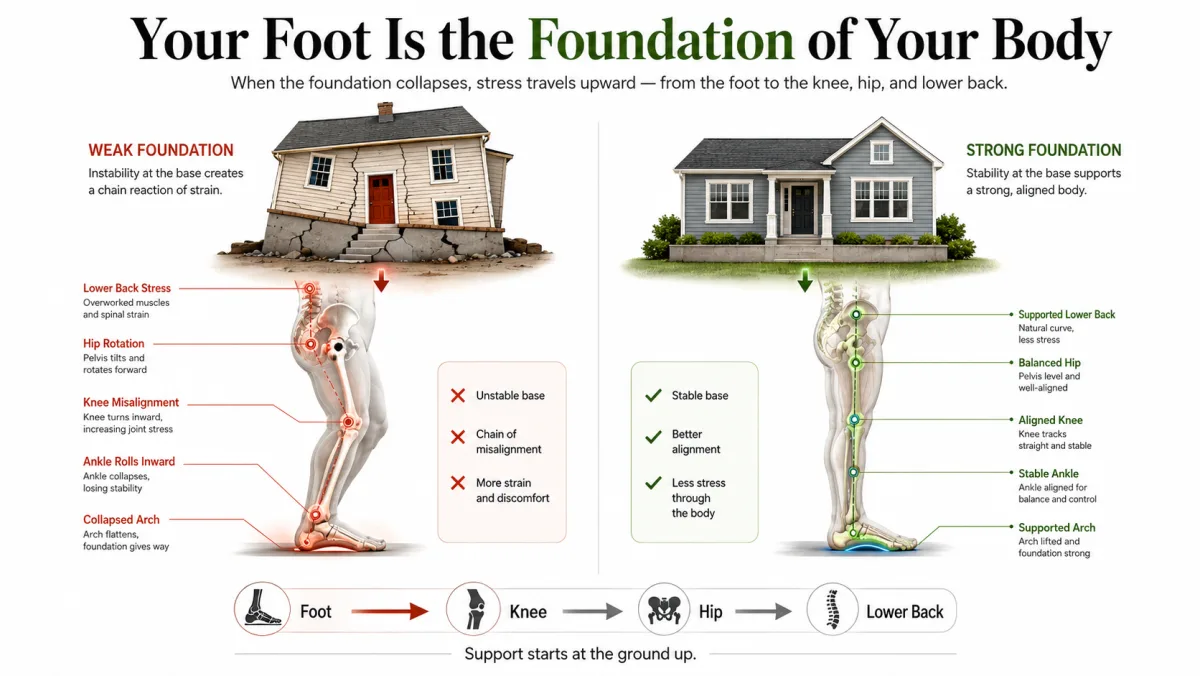
Think of your feet like the foundation of a house. When the foundation is off, every wall above it starts to crack.
Here's the chain. When your arch has no support, your foot collapses inward with every step. Your heel rolls in. That little wobble travels up to your knees, your hips, your lower back. It's why my feet ached and my knees and back felt it by the end of a shift.
Now look at what was in my wardrobe:
- The flat foam sandals? A flat slab with no support. My arch had nothing to rest on, so it kept collapsing all day.
- The rigid "orthopaedic" pairs? Hard and unforgiving, they braced my foot like a plank instead of cradling it.
- The gel inserts? They cushioned, but cushioning isn't support. They flattened in days.
- The flip-flops? Possibly the worst thing you can put a tired foot in. Zero structure.
Every pair did one of two things: it cushioned, or it did nothing at all. Not one of them actually supported the foundation. That's why the ache always came back and why it was creeping up into my knees and back.
What I needed wasn't more cushioning. I needed something built to hold my foot in the position it was meant to be in. All day. The way a custom orthotic does without the £800 price tag and the ugly shoes.
How I Found PodiFlex (And Nearly Scrolled Past It)
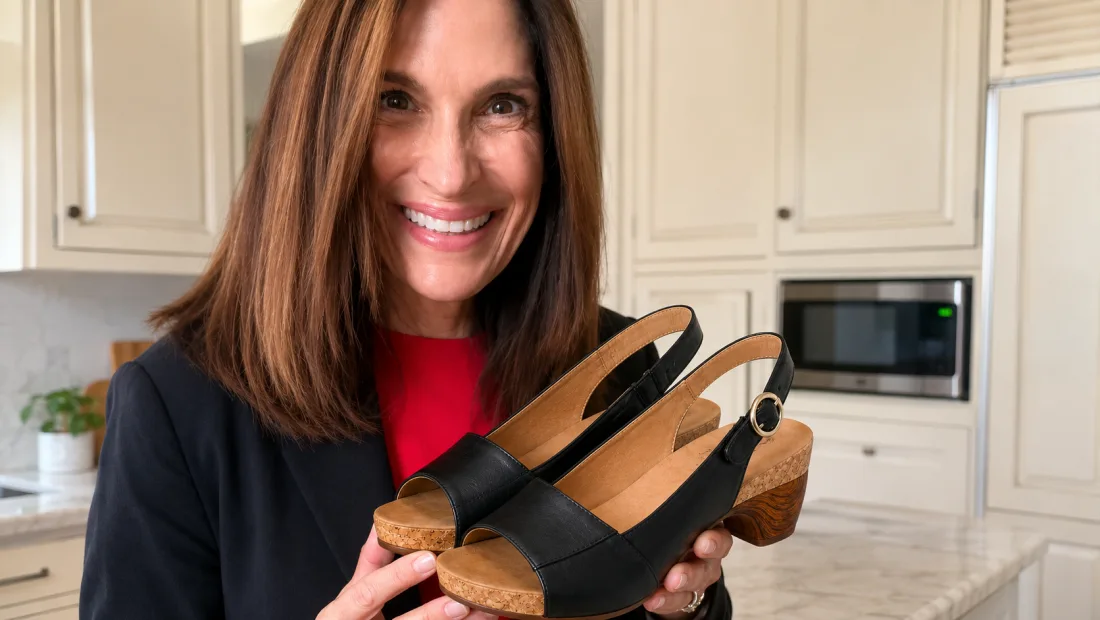
I came across PodiFlex during one of those late-night reads. Sandals designed by podiatrists, built around something they call the Triple-Zone Orthotic System.
I almost scrolled past. I genuinely could not face one more pair going into that wardrobe. But this was different from anything I'd tried because it wasn't built to cushion. It was built to support the foot in three places at once, the way a proper orthotic does. Here's what that actually means:
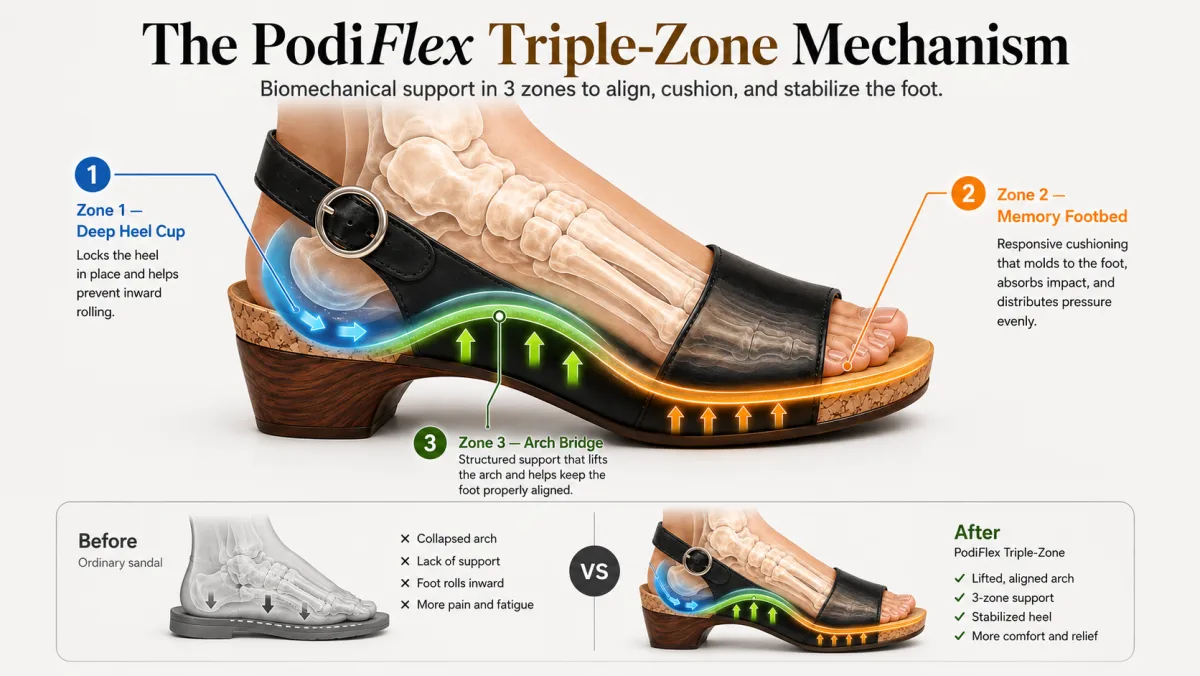
Three zones, working together. Not cushioning. Support. That's the whole point and it's why this one stayed out of the wardrobe.
I ordered one pair. Told myself if it ended up at the bottom of that wardrobe with the rest, I was done.
Check Availability & Today's Discount →WAS £109.98 · NOW £39.99What Happened in the First Week
I walked the whole place. Looked at every plant. Carried the bags to the car. And on the drive home it suddenly hit me that my feet weren't screaming and my lower back, which always nagged after a day like that, was quiet too.
That was eleven weeks ago. The sandals haven't been near that wardrobe since. And here's the part I didn't expect: they're actually nice. Slingback, neat heel, I wore them to a lunch and got a compliment. Nobody could tell they were "the supportive ones."

Why PodiFlex Is Different From Everything Else
| PodiFlex | High-Street "Comfort" | £800 Custom Orthotics | |
|---|---|---|---|
| Supports the foundation | ✓ Triple-Zone | ✕ Flat | ✓ but costly |
| Comfortable from day one | ✓ No break-in | ✕ Blisters | ✕ Long fitting |
| Fits wide feet / bunions | ✓ Wide toe box | ✕ Pinches | ✓ |
| Looks good enough to wear out | ✓ Slingback | Varies | ✕ Medical |
| Cost | ✓ £39.99 | ~£30–60 | ✕ £400–800 |
| Lasts summer after summer | ✓ One-time | ✕ Wears out | ✓ |
A Podiatrist's View
I wanted to know if a sandal could really do this, so I dug into what the professionals say.

The thinking is simple: support the foot correctly, and you support everything that sits on top of it.
Try Them for 30 Days, Risk-Free
Here's the part that made me finally click order: you don't decide from a photo. You decide from how your feet feel.
PodiFlex is so confident in these that they'll let you wear them for 30 days to work, round the shops, on a walk and judge them on the results. If your feet aren't noticeably more comfortable, you send them back for a full refund. No hassle, no questions. In other words, you only keep them if they genuinely make your days easier.
And right now, because they're selling so quickly, there's a reader offer running:
That's less than one trip to the chiropodist for a pair you'll wear all summer, every summer.
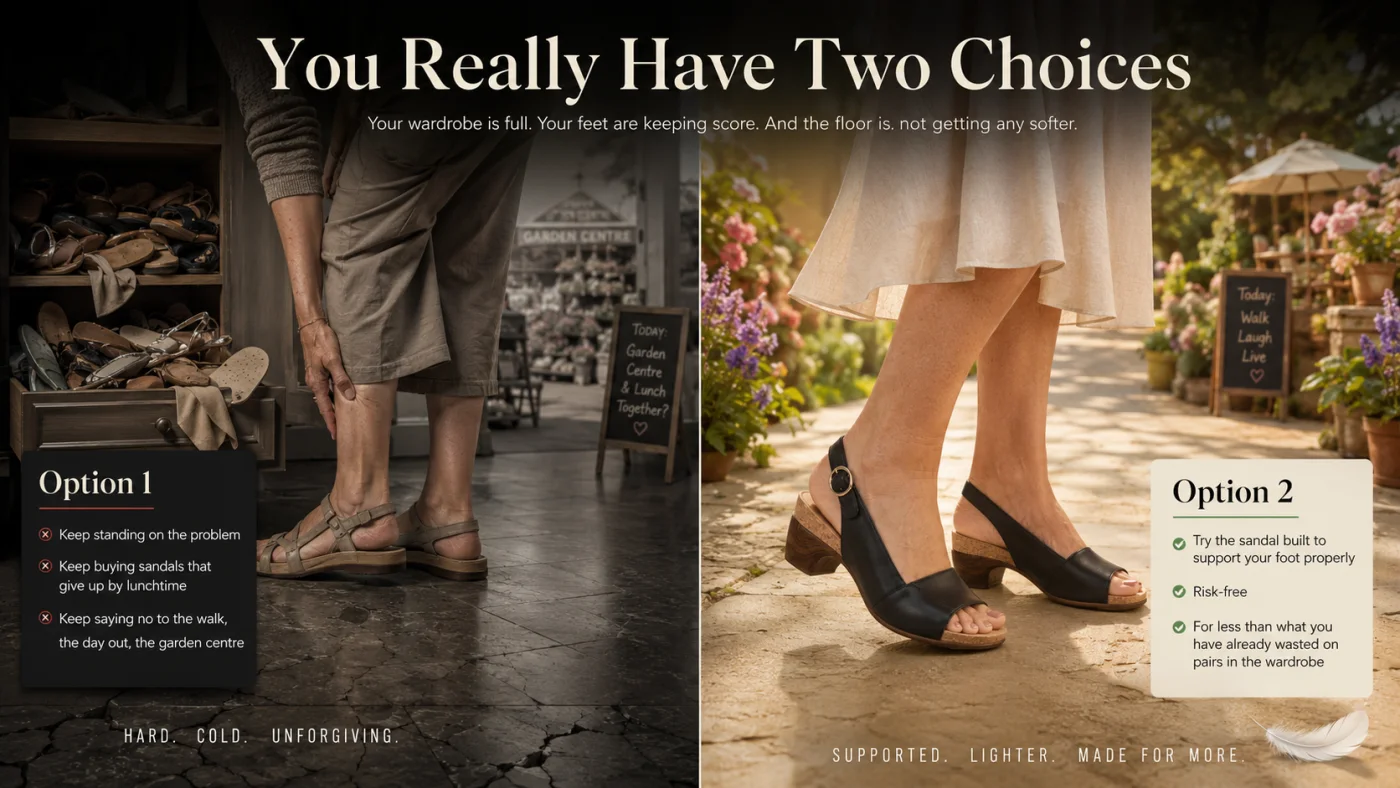
The wardrobe's full. Your feet are keeping score. And the floor isn't going to get any softer.
Check Availability & Today's Discount →30-DAY MONEY-BACK GUARANTEEMargaret
P.S. If you've been telling yourself your sore feet are "just your age," please hear me: I believed that for a year and gave up things I loved because of it. Supporting my feet properly gave me my Saturdays back. The 30-day guarantee means the only thing you risk is finding out the same thing I did.
💬 Here's what readers are saying